Does Lower Calories = Lower Body Fat?

December 23, 2011 · Posted in Diet, Fitness Over 35 · 1 Comment  

I could write a treatise on the benefits of low-calorie dieting. Granted, the subject is not that popular these days. Most diet gurus espouse a slight reduction at best in kcal intake. Some go even further down the line and suggest that one should attempt to increase one’s metabolic rate to the point of being able to consume more calories.

More calories = more muscle. More muscle = more need for calories. The cycle goes from there.

But what if I told you that I built seven pounds of muscle, at the age of 48, on 1400-1600 kcals per day? Would you believe me? Sure, if I weighed in at 130 pounds…perhaps.

I weighed myself today at 196.4 pounds, thank you very much.

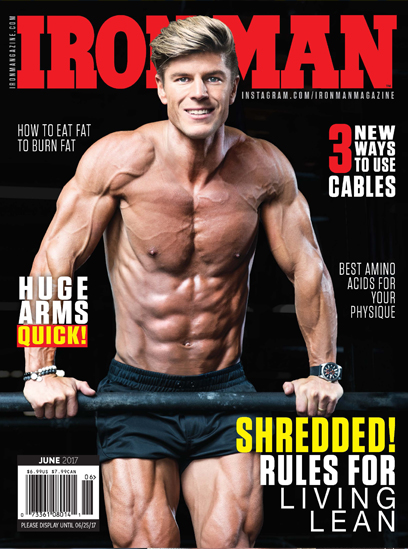
During this time, I dropped my body fat lower than it has ever been—at least as low as it is going to go without radical amounts of cardio and cannibalizing precious muscle mass. Have a looksie…

Jon Near Peak

Now, obviously, there is a catch. You cannot consume such a low number of kcals without spiking your calories every 3-4 days. During these spikes, I’ll consume upwards of 4500 kcals, and occasionally indulge in my favorite foods. This keeps me sane, and it keeps my body’s metabolic pathways alive and kicking.

The end result? All the benefits of low-calorie dieting (faster fat loss, longevity benefits, anti-aging benefits, and so on) without having to cram food down my mouth every 3rd hour on the hour, along with the ability to enjoy an abundance of calorie-rich foods several times a week.

That “life extension benefits” really cannot be overemphasized. While it can be argued that consuming high calories every 3-4 days breaks the spirit of the law governing lower-calorie diets for promoting life extension, the math still works out over the course of a week—you still consume fewer calories than your body requires for consumption-only survival.

This means you pull the energy you need from the places you hate the most: Visceral fat stores, sub-Q fat, and, yes, glycogen. That’s okay, however, as when the liver is drained of glycogen, your triglyceride levels tend to drop, and small particle LDL decreases. For those of us concerned about our hearts, this is a wonderful thing.

In future posts, I’ll cover some of the drawbacks to this approach. For the rest of us seeking to drop the body fat faster than normal, without having to eat until you just can’t eat any more, my lower-calorie approach may be just the dream ticket you’ve been searching for. Just remember to cycle your training accordingly. Hit your heaviest workouts on and the day after your high-calorie days (days 1-2). Take the following day off (or do cardio only; day 3), and have a short, high-intensity workout on the fourth day of the cycle.

More About Jon

Jon Benson is a three-time bestselling fitness and nutrition author, motivational speaker, and Internet marketing consultant. His works include “Fit Over 40, “7 Minute Muscle”, The Every Other Day Diet, The M-Power Neuro-Audio Transformation Series, and NaturaPause: Natural Hormone Solutions for Men and Women (With Dr. Holly Lucille). His daily e-zine is read by over 200,000 people from 109 countries. Jon’s most recent projects include writing and marketing collaboration with several top names in Hollywood. He resides in Malibu, California and Dallas, Texas.


Over 35? Here’s 3 Quick Tips From An Age-Defying Warrior

December 9, 2011 · Posted in Fitness Over 35 · Comment  

Aging is the most challenging workout.

It stretches our endurance to the limits, and lays bare both the inner strength and outer fragility of the most courageous soul.

Yet, when it comes to fitness, aging is more of a nuisance than a sandglass-shaped ne’er do-well, assuming you are in relatively good health when you embark on the journey to your ideal you.

I wasn’t so lucky.

At the ripe old age of 32, I suffered the seventeenth physical setback of my young life—panic disorder. I had already overcame near kidney failure in my early youth, cystic acne in my teens (hardly life-threatening, but the experimental medicine I swallowed daily to rid it certainly proved to be), and a near-fatal motorcycle crash in my late teens.

Disease set in when I breeched my twenties, as I beheld my cholesterol skyrocket to 455, my triglycerides soar to over 2,000, and my blood pressure escalate to 200/110. My doctors called me, “The Freak.” They had never seen anything quite like this before, especially from a guy who, from the outside, looked healthy as the proverbial horse.

Inside, however, this horse was quickly turning to glue.

Eventually, I lost most of my pituitary function, and was forced to take exogenous hormones at the age of twenty-seven. My testosterone was a dismal fifty-two—lower than your average eighty-year-old. Thyroid? What thyroid? My T3 levels were almost undetectable. On and on it went—a young man, aging on the inside at an incredible rate, without an explanation in site.

Or so I thought.

A few years later, my chief nemesis took on a moniker other than the expletives I was using to describe it—Metabolic Syndrome, or Syndrome X. I actually like that name, as it sounds a a tad science fiction-esque, a side of the anti-reality fence on which I often boondoggle. Syndrome X gave me a target, along with some supportive research, that eventually led to the authorship of my first book.

However, before that was to occur, I had some more suffering to do. A young, stubborn man can never receive enough pain in exchange for wisdom.

It was only later in my life, after suffering a massive heart attack (did I mention that?) when I put the pieces together. Fitness was no longer driven by the, “I want to look like Frank Zane” inspiration of my twenties, nor the, “Great for meeting girls” mantra of my early thirties.

Fitness, especially nutritive fitness, became my altar. My physical salvation was to be discovered upon that altar, as I learned which foods to sacrifice in order to turn a rapidly aging man into the exact opposite. I was determined to overcome my Darwinian lot in life, taking out as many of these disease states as possible before they delivered on their purpose to do the same.

So far, I’m winning the battles, while fully acknowledging that the war itself subsists.

Still, the lessons have been invaluable. From this experience, I can comfortably say that I now understand the specific needs of the aging male or female when it comes to achieving a leaner, more muscular, and, above all, healthier body.

(Note: If you want to read my entire story, and fifty-two other stories just like it, from men and women ranging from forty to seventy-two, then I highly suggest you have a look at my book on achieving superior fitness at any age, Fit Over 40.)

Here are three tips I recommend for anyone over the age of thirty-five who wants to lower bodyfat and decrease the risk of metabolic syndrome, heart disease, and obesity-related insulin resistance/Type 2 Diabetes.

Tip 1
Avoid Carbohydrate In The Morning

Yes, I know—this flies in the face of all reason, doesn’t it? Not so much when you look under the nutritive hood. As we age, our bodies become more insulin resistant, which leads to a host of disease states, including the ones covered above. For many men and women, the time of the greatest resistance is in the morning—smack dab when you’ve been told to consume those so-called healthy starches.

For me, it’s monounsaturated fats, egg whites, and lots of veggies in the morning—at least when I’m wanting to get super-lean. When I’m in maintenance mode, and occasionally when I’m not, I’ll opt to enjoy quinoa, which is actually a form of seed, despite being grain-ish in appearance, taste, and even classification. Mix that with some fresh blueberries, protein powder, and some non-fat yogurt, and you have a delicious breakfast.

The goal is simple: Keep your carbs at near-zero, or make sure you get them from a source other than grains. Leave your grains, if you must have them (I find them mostly unnecessary) for midday and early afternoon.

Tip 2
Flip Your Workouts Upside-Down

Most people over the age of thirty-five have it totally backwards, especially the ladies—it’s intense cardiovascular work (you know, for heart health?) followed by minimum-intensity resistance training, if there’s any resistance training at all.

Utterly and completely backwards: You absolutely must focus on brief, burst-style resistance training three to four days per week. Before, after, or any time you choose, hit the treadmill or the outdoors for a brisk walk. That’s right—a walk. Leave intense cardio for post-workout training only, and then only for fifteen to twenty minutes. That is all you need.

What you really need is lean muscle mass to burn off more calories, and keep insulin from driving more fat into fat cells by granting it a diversion in the form of anabolism. Insulin also feeds muscle tissue glucose. This kills many birds with one kick-ass stone. Your heart will not suffer—in fact, study after study has demonstrated that nominal cardiovascular activity, such as walking, is superior for long-term health when accompanied by intense resistance exercise.

One dominant theory as to why involves the expansion of the coronary arteries under the strain of resistance training. Coronary arteries have been shown to increase in diameter faster with resistance training than running. Peripheral arteries, formed as the heart adapts to supply blood flow, despite blockages, form more readily from resistance training as well. My thirteen peripheral arteries kept me alive during forty-eight minutes off oxygen. My cardiologist was impressed, and I was spared any long-term heart damage.

This is not to say cardiovascular training is not adequate for your heart—it merely plays a supportive role in comparison to resistance training when it comes to overall heart health. Both forms of exercise are required for optimal protection.

Tip 3
Find A Role Model

When I was pulling myself up by the bootstraps and out of the quagmire that decades of bad genetics, poor eating, and stress had flung me into, I found it absolutely essential to employ the strategy of role modeling.

The theory is simple: Why reinvent the wheel? Find someone similar to you, both in age and in physical characteristics, who has overcome his/her demons, and pattern his/her behaviors. At the very least, you’ll have a starting place brimming with psychological certainty. Certainty is, perhaps, the most valuable of states when it comes to succeeding in the game we call body recomposition.

I became so enamored with the power of role modeling that it became the primary focus of Fit Over 40: Role Models For Excellence At Any Age! This also allowed my ego to take a back seat. Rather than focus on my own physical and medical transformation, which could easily be labeled as lucky, or perhaps iconoclastic success, why not focus on men and women of all ages: forty, fifty, sixty, and seventy-plus?  You can read more about it here.

That simple idea went on to create a bestseller, and take me on a wonderful journey that has branched off into the blog you are reading now—a blog that, I promise you, will not contain essays of this length on a regular basis. I do actually have a life, despite my love for the written word, and my passion for conveying the truth that anyone can achieve just about any level of fitness they desire—and at any age.

I carried my fragile frame and constitution from a broken-down thirty-something to a competitive bodybuilder and fitness athlete. Now, you needn’t go that far—but I had an axe to grind, and I used my own genetics and history as the sharpening stone.

Besides, I still have that Frank Zane poster hanging in my bedroom hallway.

I suppose some dreams are indeed ageless.

More About Jon


Jon Benson is a three-time bestselling fitness and nutrition author, motivational speaker, and Internet marketing consultant. His works include “Fit Over 40, “7 Minute Muscle”, The Every Other Day Diet, The M-Power Neuro-Audio Transformation Series, and NaturaPause: Natural Hormone Solutions for Men and Women (With Dr. Holly Lucille). His daily e-zine is read by over 200,000 people from 109 countries. Jon’s most recent projects include writing and marketing collaboration with several top names in Hollywood. He resides in Malibu, California and Dallas, Texas.